

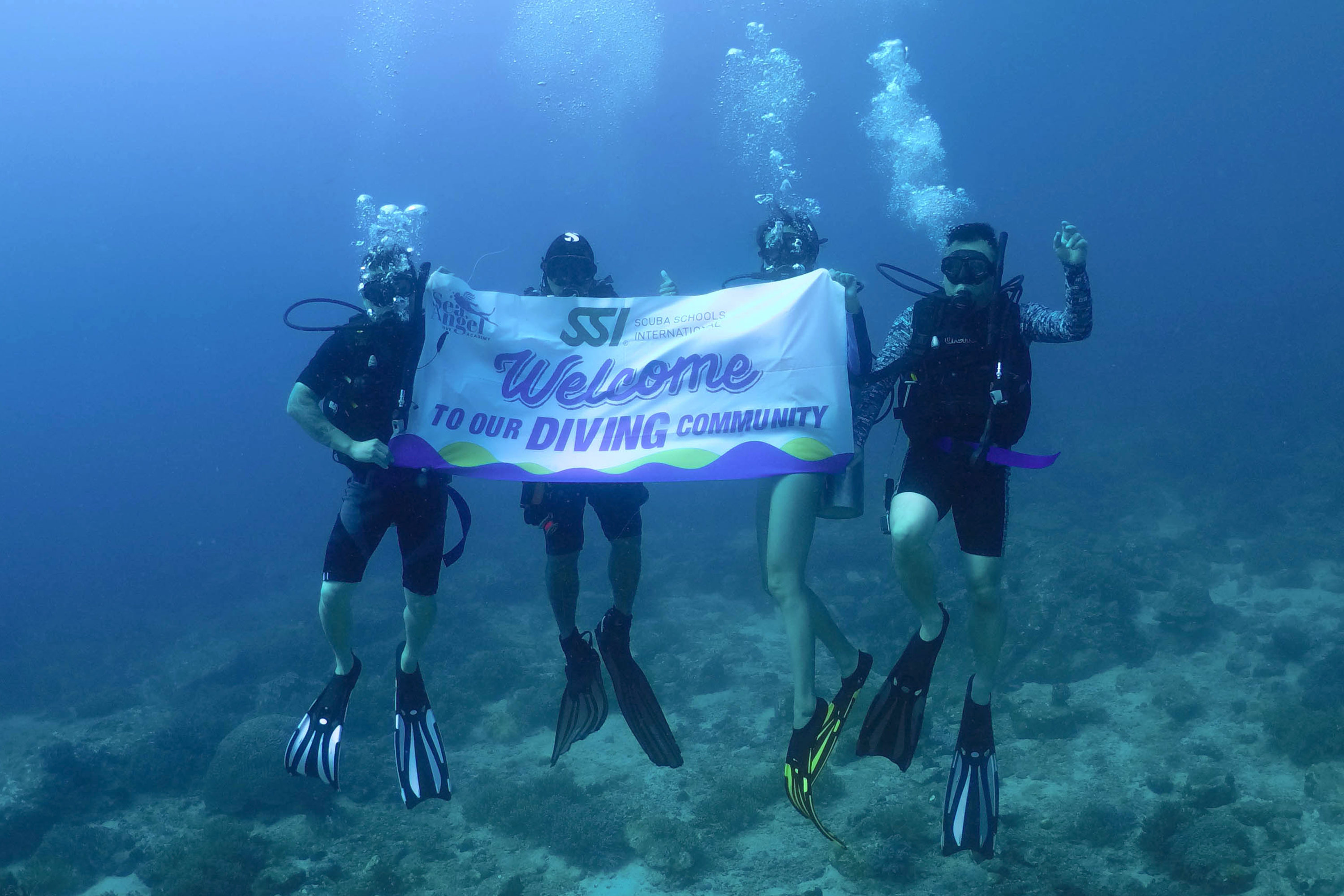
The first moment you breathe underwater is unlike anything a holiday photograph can capture. The sea becomes quieter, your movements slow, and a new world of coral gardens, shimmering fish and blue horizons opens around you. This guide to SSI scuba certification explains how to turn that first sense of wonder into the confidence to explore it properly – with expert instruction, considered preparation and the comfort of an island escape.
For travellers coming to Pulau Tenggol, learning to dive can be more than a course added to an itinerary. It can be the centrepiece of a stay where relaxed beach mornings lead to skills practice, and each new achievement brings you closer to the underwater wonderland just offshore.
What SSI scuba certification gives you
SSI, or Scuba Schools International, is a globally recognised diver training organisation. Its courses are designed to build knowledge, practical ability and calm decision-making step by step. The goal is not simply to complete a set of exercises. It is to become a diver who understands their equipment, respects the marine environment and feels ready to enjoy future dives with a qualified buddy.
Your first full qualification is usually the SSI Open Water Diver certification. Once completed, it allows you to dive independently with an appropriately certified buddy, within the limits of your training and local conditions. It is recognised by dive operators around the world, making it a valuable passport for future holidays in destinations from Malaysia to the Maldives.
SSI’s digital learning approach is especially appealing for resort guests. Course theory can often be reviewed before travel or during quieter moments between island experiences, leaving more of your time at the destination for the part everyone anticipates: getting into the water. Your instructor remains essential throughout, helping translate the learning materials into safe, comfortable habits underwater.
Choosing the right SSI course for your holiday
The best starting point depends on your experience, available time and what you want from the trip. If you are curious but not ready to commit to a certification course, a Try Scuba experience offers a closely supervised introduction. It is a chance to breathe from a regulator, practise a few simple skills and see why divers become so captivated by the ocean. It is an experience, rather than a certification, but it can be a wonderful first step.
For those who want a recognised qualification, the Open Water Diver course is the natural choice. Expect a combination of independent learning, instructor-led review, confined-water skills and open-water dives. The schedule varies with conditions, course format and individual progress, so it is wise to allow enough time in your holiday rather than treating certification as something to rush between excursions.
Already certified but out of practice? A refresher may be the better decision. Returning to scuba after a long break can bring understandable nerves, even for someone who once felt entirely at ease underwater. A thoughtful refresher revisits equipment assembly, buoyancy, mask and regulator skills, and the essential routines that make a dive feel controlled again. It is a far more enjoyable route back into the sea than hoping everything will return the moment you descend.
After Open Water, SSI continuing education and specialty courses offer a more focused way to develop. Perfect Buoyancy can help you move gracefully above coral; Enriched Air Nitrox may suit divers planning multiple dives; and deeper or navigation training can broaden where and how you explore. There is no need to collect courses quickly. The most rewarding progression is the one that matches your interests and experience.
What your Open Water training will feel like
Many beginners arrive concerned that scuba will be difficult, technical or intimidating. There is equipment to understand, of course, but good training breaks every task into manageable stages. You begin by learning what each piece of kit does and how it supports you. Then, in shallow and controlled water, you practise the skills that allow you to respond calmly if something unexpected happens.
You will learn to clear water from your mask, recover and clear your regulator, manage buoyancy and communicate through underwater signals. These exercises are not designed to catch you out. They create familiarity. By repeating them under the guidance of an instructor, you learn that small problems have simple, practised responses.
The open-water portion is where the course becomes particularly memorable. Skills are completed in the sea, but so is the real pleasure of diving: drifting over reef structures, noticing fish behaviour and recognising how much more relaxed you have become since your first descent. SSI Open Water Diver training normally includes several knowledge sections, confined-water practice and four qualifying open-water dives. Your dive centre will confirm the current course requirements and timetable before you begin.
A good instructor adjusts the pace where possible. Some guests grasp buoyancy almost immediately; others need extra time to become comfortable clearing a mask or equalising their ears. Neither experience defines whether you can become a capable diver. Patience, openness to feedback and a willingness to practise matter far more.
Preparing for certification in Tenggol
A tropical island setting offers a beautiful place to learn, but the sea always sets the terms. Visibility, current, weather and boat access can change, which is why a quality dive operation plans training around conditions rather than forcing a fixed schedule. Flexibility is part of a safe and premium diving holiday.
Before travelling, complete any medical questionnaire honestly. Certain health conditions, medications, recent illnesses or operations may require approval from a doctor before diving. This is not an administrative detail to leave until the last minute. Getting clarity in advance protects your holiday and gives your instructor the information needed to support you appropriately.
You do not need to arrive as an athlete, but you should be comfortable in water and reasonably well rested. Diving days begin better after a good night’s sleep, a proper breakfast and sensible hydration. Avoid heavy drinking the evening before, and leave generous time after your final dive before flying. Your dive team will advise the appropriate no-fly interval for your diving profile.
Bring swimwear, sun protection suitable for use around marine environments, a reusable water bottle and a light layer for boat journeys. Most new divers use dive-centre equipment, but fit matters. Tell the team if a mask feels uncomfortable, fins pinch, or a wetsuit is too loose or restrictive. Small adjustments above water make a significant difference below it.
At The One Tenggol Island Resort, the appeal lies in pairing structured SSI training with the ease of an exceptional island stay. Rather than commuting to a distant dive shop or sacrificing comfort for access to the sea, guests can let the rhythm of the resort support the experience: rest well, train with purpose, then return to the beach with the day’s new skills still fresh in mind.
The habits that make better divers
Certification is a beginning, not a finish line. The strongest new divers are not necessarily the ones who descend fastest. They are the ones who stay close to their buddy, check their gauges regularly, communicate early and keep their buoyancy controlled around fragile reef life.
Buoyancy deserves particular attention in Tenggol’s colourful marine environment. Being neutrally buoyant means you can hover without touching coral, stirring sand or reaching for the reef. It protects the habitat and often makes marine encounters better too. Fish behave more naturally around divers who move slowly and respectfully.
Equalising is another area where listening to your body matters. Descend gradually, equalise early and often, and never push through discomfort in your ears or sinuses. If you cannot equalise, signal your buddy and ascend slightly. There is always another opportunity to continue once you are comfortable; no dive is worth forcing.
Good environmental awareness extends beyond the dive itself. Keep a respectful distance from turtles, reef fish and other marine life, avoid feeding or touching animals, and secure every piece of equipment so nothing trails across the coral. A premium marine experience should leave the reef exactly as extraordinary for the next guest.
Is SSI certification right for families and couples?
SSI training works beautifully for couples, friends and families because each person can meet the course at their own level. One guest may choose a Try Scuba session while another works towards Open Water certification, and non-divers can still enjoy snorkelling, beach time and the calm pleasures of island life. The best shared holiday does not require everyone to follow an identical plan.
For younger divers, age requirements and available junior certifications apply, so families should discuss options with the dive centre before booking. Parents can also consider whether their child is genuinely comfortable in water and ready to follow instructions attentively. Enthusiasm is a lovely starting point, but confidence and readiness create the best experience.
If you are deciding whether to learn before travelling or while on the island, consider what you value most. Completing theory in advance can preserve more holiday time for water sessions. Learning everything during the stay may feel more immersive, but it requires space in the itinerary. Either way, choose an approach that leaves room to enjoy the process rather than simply chase the certificate.
Your first certification card may fit neatly into a wallet, but the real reward is much larger: the confidence to slip beneath the surface and feel at home there. Give yourself time, choose instruction you trust, and let each careful breath bring the reefs of Tenggol a little closer.