

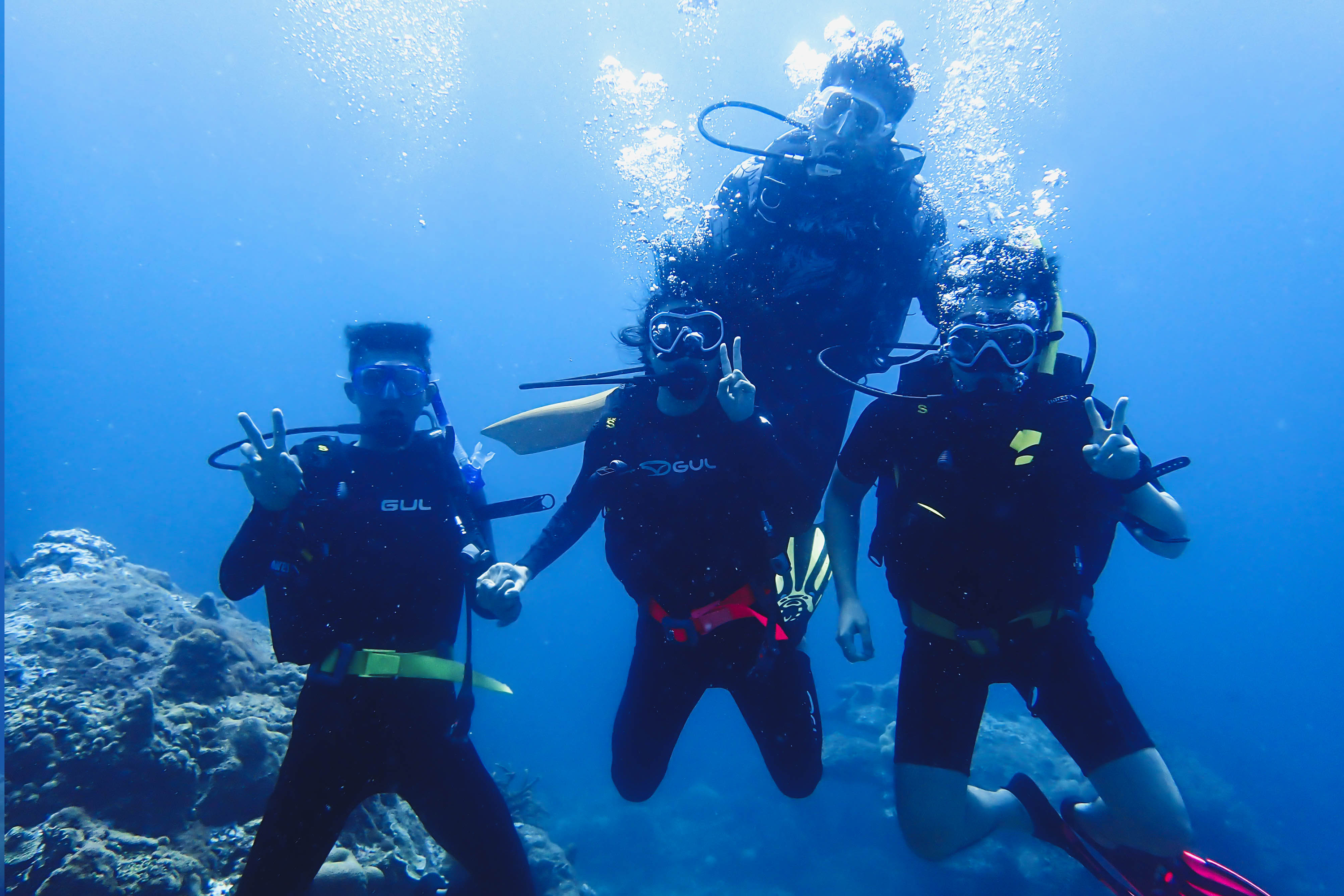
The moment you first breathe beneath the surface, the island takes on a completely different character. Sunlit water becomes a living blue world, where schools of fish move across coral gardens and a turtle may appear with no more fuss than a passing cloud. If you are wondering how to start SSI diving, the best answer is simpler than many first-time guests expect: begin with expert guidance, allow yourself time, and choose a setting that feels as comfortable above the water as it does below it.
For holidaymakers, learning to scuba dive need not mean sacrificing the pleasures of an island escape. A well-planned SSI course can sit beautifully alongside slow beachfront mornings, excellent meals, snorkelling adventures and time with the people you came to travel with. The key is choosing the right starting point for your confidence, schedule and ambitions.
Why SSI is a welcoming way to begin
SSI, or Scuba Schools International, is a globally recognised diver training organisation. Its courses are designed to build skills progressively, so you understand not only how to use your equipment but why each safety habit matters. Rather than rushing towards a certificate, you learn to feel calm, capable and at home in the water.
For beginners, that structure makes a real difference. You will begin with essential theory, either through digital learning or in person, before practising in confined water conditions. Once you are comfortable with the fundamentals, you move into open water under the close supervision of a qualified instructor.
The pace is not identical for everyone. Strong swimmers may feel settled quickly, while others need a little more time to become comfortable clearing a mask or breathing through a regulator. Neither experience is unusual. A quality dive centre will teach to your needs, not ask you to perform for the group.
How to start SSI diving: choose your first experience
Your first decision is whether you want a brief taste of scuba diving or a full entry-level certification. Both are worthwhile, but they suit different kinds of holiday.
Try Scuba for a first breath underwater
A Try Scuba experience is ideal if you are curious but not yet ready to commit to a multi-session course. After a clear briefing, you learn the basics of breathing, communicating and moving with your equipment before entering calm, shallow water with an instructor. It is a wonderful way to discover whether the quiet rhythm of scuba feels right for you.
This option does not make you a certified diver. It is an introduction, designed for confidence and enjoyment rather than independent diving. For couples or families with different holiday interests, it can be an especially appealing way for one person to experience the underwater world while leaving plenty of time for the rest of the island.
Open Water Diver for a lasting qualification
If you already know you want to explore reefs on future holidays, the SSI Open Water Diver course is the natural next step. This is the foundational certification that qualifies you to dive with a buddy to a defined depth limit, subject to local conditions and your training.
Expect a combination of knowledge development, practical skills and open-water dives. You will learn how to assemble and check your scuba equipment, manage buoyancy, communicate underwater, plan a dive and respond sensibly to common situations. The course asks for focus, but it is also full of memorable firsts: your first controlled descent, your first effortless hover and the point when you realise you are no longer thinking about every breath.
Holiday timing matters here. While it can be tempting to leave certification until the final day, it is wiser to begin early in your stay. That gives you space to learn without pressure and preserves time afterwards for relaxed, qualified fun dives. It is also sensible to leave an appropriate interval between your last dive and flying, according to your instructor’s guidance.
What you need before you arrive
You do not need to be an elite swimmer or own a cupboard full of specialist equipment to start. You should be comfortable in the water, medically fit to dive and prepared to follow your instructor carefully. SSI courses include water skills assessments, but these are intended to establish practical safety, not to intimidate newcomers.
Before booking, complete any medical questionnaire honestly. Certain medical conditions, recent illnesses, medications or past surgeries may mean you need a doctor’s approval before taking part. This is not a barrier for many people, but it is better handled before travel than on the day you hope to enter the sea.
Most first-time divers use equipment supplied by the dive centre. You will be fitted with a mask, fins, buoyancy control device, regulator, cylinder and wetsuit or rash protection suited to the conditions. A personal mask can be a worthwhile purchase if you dive often, but it is not essential for your first course. Fit matters far more than brand names.
Bring swimwear, a towel, reef-conscious sun protection for your time on land, and a willingness to ask questions. Avoid alcohol before diving, stay hydrated in the tropical heat and get a good night’s sleep. These small choices make the experience more enjoyable and help you stay alert during training.
Learn in a destination that makes the journey feel special
Your surroundings shape your first experience. Learning in clear, warm tropical water can make skills practice feel far less daunting than many newcomers imagine. Seeing coral, colourful reef fish and dramatic island scenery also reminds you why each exercise has a purpose: it prepares you to enjoy this remarkable environment safely.
At the same time, beautiful water is not a substitute for good instruction. Look for a dedicated SSI dive centre with patient professionals, well-maintained equipment and a sensible approach to weather and sea conditions. The best instructors are reassuring without being casual. They explain clearly, demonstrate carefully and are happy to repeat a skill until it feels natural.
A resort setting adds another kind of confidence. Instead of arranging transfers, equipment, meals and accommodation separately, you can settle into one considered island experience. At The One Tenggol Island Resort, that means pairing the anticipation of formal SSI training with beachfront comfort, attentive hospitality and a marine environment worth getting excited about.
The skills that matter more than speed
Many people arrive worried about one thing: breathing underwater. This is understandable, yet most beginners adjust surprisingly quickly once they are standing or kneeling in shallow water with an instructor beside them. Breathe slowly and continuously, and give yourself a few moments to notice that the regulator delivers air whenever you inhale.
The skill that often transforms a novice diver’s comfort is buoyancy control. Learning to achieve neutral buoyancy means using small, measured adjustments so you can hover without touching coral or constantly kicking. It takes practice, and no one expects perfection on the first session. But it is the difference between feeling like you are working against the water and feeling gracefully suspended within it.
Mask clearing is another common concern. Water can enter a mask, particularly when you are learning, but the technique for clearing it is straightforward and practised in a controlled setting. The same applies to regulator recovery, equalising pressure in your ears and using underwater hand signals. Training turns unfamiliar moments into manageable ones.
Do not measure your progress against another student. A confident learner may need extra help equalising, while a nervous learner may become wonderfully relaxed once they see their first reef fish. Calm repetition is more valuable than racing through a checklist.
Make your first dives kinder to the reef
Beginning scuba diving also means becoming a guest in a fragile underwater habitat. Your instructor will teach responsible habits from the start: maintain good buoyancy, keep fins away from coral, never chase wildlife and take nothing from the sea. These are not merely rules for photographs. Coral reefs are living communities, and even a brief touch can cause harm.
Choose observation over pursuit. If a turtle, shark or ray appears, remain still, breathe steadily and let the encounter happen on its own terms. The most extraordinary marine moments are often the quietest ones.
It is also worth keeping your first day simple. Focus on the skills, the scenery and the feeling of being present. Cameras can wait until your buoyancy is secure. A calm diver who respects the reef will see more, disturb less and carry home better memories than someone trying to capture every second.
Turn curiosity into your next island story
Starting SSI diving is not about proving that you are fearless. It is about discovering a new way to travel, one where the shoreline is only the beginning of the destination. Choose a course that matches your holiday, listen to your instructor and give yourself permission to learn at your own pace. The reward may be a certification, but the real pleasure is the moment the underwater wonderland begins to feel like a place you belong.