

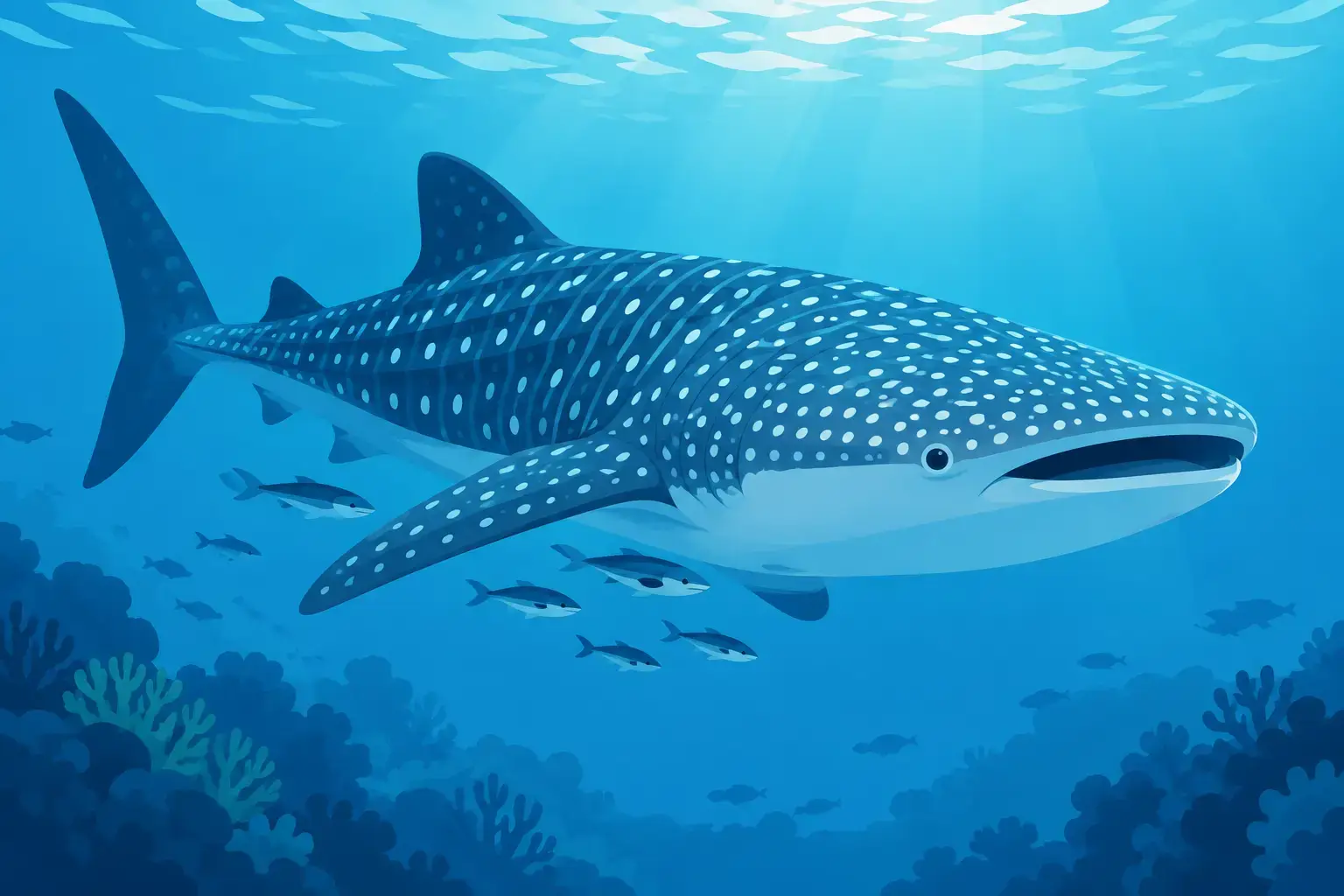
A shadow moves through blue water, larger than anything else in sight. Then the unmistakable pattern appears: a constellation of white spots and pale stripes across an enormous back. For swimmers and divers, seeing whale sharks is one of those rare marine encounters that can make an island holiday feel genuinely extraordinary.
Despite their impressive scale, these spotted giants are calm, filter-feeding fish. They remind us that some of the ocean’s most powerful moments are also its quietest – a slow glide beside a creature that has travelled through tropical seas for millions of years.
What makes whale sharks so remarkable?
Whale sharks are the largest fish on Earth. Adults commonly reach lengths of 10 to 12 metres, although exceptional individuals can grow larger. Their wide, flat heads and mouths may look formidable at first glance, but they are designed to filter tiny food from the water rather than hunt large prey.
Plankton, fish eggs, krill and small schooling fish form much of their diet. As a whale shark swims with its mouth open, water passes over specialised filters that retain food while water flows back out through the gills. It is an elegant feeding method and a striking contrast to the shark’s enormous size.
Their markings are equally special. Each whale shark has its own arrangement of spots and stripes, much like a fingerprint. Researchers use photographs of these patterns to identify individuals, track their movements and better understand how long they remain in particular areas.
Whale sharks are sharks, not whales. The name reflects their great size and filter-feeding behaviour, but they are cartilaginous fish, related to rays and other sharks. They also have a long history: the species has existed in some form for millions of years, yet much about its life cycle, migration and breeding remains unknown.
Where whale sharks may be found in Malaysia
Malaysia’s warm tropical waters, seasonal plankton blooms and rich marine ecosystems can provide suitable conditions for whale sharks. Sightings are possible in several parts of the country, including waters off Sabah and selected areas of Peninsular Malaysia, but they are never guaranteed.
That uncertainty is part of what makes an encounter meaningful. Whale sharks are wild, wide-ranging animals. They do not follow a resort timetable, and their appearance can be influenced by sea temperature, currents, food availability and seasonal conditions. A responsible marine experience should celebrate the whole underwater world, rather than promise a single species.
Pulau Tenggol is best known for clear water, vibrant reef life and rewarding diving during the island season. Guests may encounter turtles, reef fish, rays and a colourful variety of corals across different sites. At certain times, larger pelagic visitors can add an extra sense of anticipation to a day on the water, but the finest approach is to arrive with curiosity rather than expectation.
For divers and snorkellers, this is a valuable distinction. A holiday built around a guaranteed wildlife sighting can disappoint if nature follows its own course. A holiday built around exceptional reefs, comfortable island living and the possibility of something spectacular offers far more room for wonder.
A gentle giant, but still a wild animal
Whale sharks have a deserved reputation for being placid around people. They are not known to pose a threat to swimmers, and their feeding habits mean humans are not on the menu. Still, their size alone calls for care. A movement of the tail can be powerful, and an animal navigating open water should always have the space to choose its own direction.
The best encounters happen when people behave as respectful visitors. Whether you are on scuba or snorkelling at the surface, keep a generous distance and let the whale shark set the pace. There is no need to chase, block its path, touch its skin or swim directly in front of its mouth.
Touching is especially harmful. Whale shark skin has a protective outer layer, and contact can disturb the animal or remove its natural coating. Flash photography should also be avoided, while calm observation and considerate photography create a better experience for everyone in the water.
A skilled guide or dive professional adds real value here. They can brief guests before entering the sea, assess changing conditions and make sure the group remains controlled rather than crowding the animal. This is not about restricting a magical moment. It is what protects that moment – for the whale shark, and for the next people lucky enough to see one.
How to behave in the water
If a whale shark appears, stay calm and follow your guide’s instructions. Approach slowly from the side, never from the front or behind. Keep several metres away, minimise splashing and avoid diving down onto the animal from above.
For snorkellers, a relaxed fin kick and good buoyancy help prevent accidental contact. For scuba divers, careful trim matters just as much, particularly when there are other guests nearby. The aim is not to get the closest photograph. It is to witness a wild animal moving naturally through its own environment.
Why responsible tourism matters for whale sharks
Whale sharks are classified as Endangered, facing pressures that range from accidental capture in fishing gear to vessel strikes, habitat change and poorly managed tourism. Their slow growth and low reproductive rate make conservation especially important. Losing even a small number of mature animals can have consequences for the wider population.
Well-run wildlife tourism can be part of the solution when it creates a clear reason to value living animals and supports local marine awareness. The standard matters, however. Too many boats, crowded swimmers, careless handling or attempts to feed animals can alter their behaviour and turn a respectful encounter into a stressful one.
Choosing an operator that prioritises briefings, small groups and environmentally minded boat practices is a practical way to travel more thoughtfully. It also tends to create a more exclusive, enjoyable experience. There is a world of difference between rushing towards wildlife in a crowd and entering the water with a considered, experienced team.
At The One Tenggol Island Resort, the appeal of the sea extends beyond ticking off a famous sighting. The island’s reef environment invites guests to slow down, build confidence in the water and appreciate the many smaller details that make tropical diving so memorable – a turtle resting beneath a ledge, a school of bright fusiliers shifting in unison, or a curious reef fish passing over coral gardens.
Preparing for a marine-life holiday in Tenggol
A little preparation makes underwater time more comfortable and rewarding. If you are new to diving, a try-scuba session or formal SSI training can provide the skills needed to explore with confidence. Certified divers who have not been underwater for some time may benefit from a refresher before heading to deeper or more varied sites.
Snorkellers should not feel that diving is the only route to marine wonder. Good-fitting masks, reef-safe sun protection and a willingness to move slowly can reveal an extraordinary amount close to the surface. Conditions vary with weather and sea state, so flexibility is useful, particularly when travelling to an island destination.
It also pays to pack with the reef in mind. Avoid leaving litter on boats or beaches, secure loose items before a journey across the water and never collect coral, shells or marine life as souvenirs. Take photographs, carry the memory home and leave the underwater landscape as beautiful as you found it.
The encounter is never the whole story
There is a temptation to measure an ocean holiday by its biggest possible sighting. Whale sharks deserve their legendary status, but a fulfilling day at sea is not defined by one animal alone. It may be the early-morning stillness before a boat departs, the pleasure of returning to a beachfront room after a dive, or the shared excitement of spotting something unexpected beneath the surface.
When a whale shark does appear, give it space, watch closely and allow the experience to unfold on its terms. That quiet respect is what turns a remarkable sighting into a truly lasting one.