

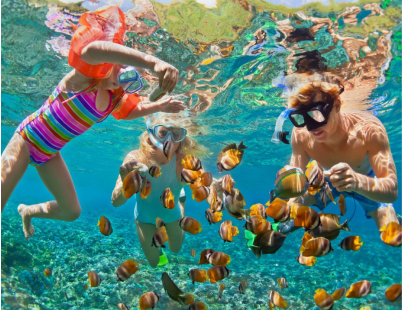
A child’s first glimpse beneath clear tropical water can become the moment they fall in love with the sea. But can children join snorkelling trips without turning a dream island day into a stressful one for parents? Usually, yes – provided the outing is chosen around the child’s confidence, swimming ability and comfort in open water, rather than their age alone.
Around Pulau Tenggol, the reward for getting those details right is extraordinary: warm blue water, sheltered bays and flashes of reef life that feel close enough to touch. A well-planned family snorkelling trip gives children a genuine sense of discovery while allowing parents to relax into the experience too.
Can children join snorkelling trips at any age?
There is no single age at which every child is ready to snorkel. Operators set their own participation rules, and conditions matter far more than a number on a birthday cake. Some children are calm, capable swimmers at six or seven; others may need more time, even if they are older.
The essential question is whether your child can stay relaxed in the water, listen carefully to instructions and communicate if they feel uncomfortable. A child does not need to be an expert swimmer to enjoy a supervised snorkelling experience, particularly when they use a properly fitted buoyancy aid and stay close to an adult. However, they should be happy putting their face in the water and able to remain calm if a little water enters their mask or snorkel.
For younger children, the best experience is often a short session in a quiet, shallow bay rather than a long boat excursion with several stops. They can float, look down at the coral and fish, then return to the boat or shore before fatigue turns excitement into tears. There is no prize for staying in the water longest.
Children who cannot swim may still be able to participate in certain carefully supervised settings, using flotation equipment and remaining within arm’s reach of a parent or guide. That said, this is very much an operator-by-operator decision. Parents should be candid about their child’s abilities when booking, not simply assume that a family trip suits every family member.
What makes a snorkelling trip family-friendly?
A family-friendly snorkelling trip is not simply an adult trip with smaller masks. It is designed with pace, safety and comfort in mind. Look for a team that gives a clear briefing, provides appropriately sized equipment and is willing to help children practise before entering deeper water.
The journey itself matters. A fast or lengthy boat ride can feel thrilling to some children and overwhelming to others, especially on a hot day or when the sea is choppy. Ask about the expected travel time, the amount of shade on board, toilet facilities and whether there is a calm location suitable for first-time snorkellers. Small practical comforts often make the difference between an easy family adventure and a difficult afternoon.
The guide-to-guest ratio is equally valuable. Children need more reassurance, more time adjusting masks and more frequent check-ins than experienced adults. A good guide notices the child who has quietly become cold, nervous or tired before that child feels compelled to push on.
Conditions should always have the final say. Even confident young swimmers may be better off postponing if visibility is poor, currents are stronger than expected or the weather is unsettled. A responsible operator will adjust the site, shorten the session or cancel where necessary. That is not a disappointment in safety standards – it is exactly what parents should want.
The value of a gentle first session
Before setting off to the reef, give children time to become familiar with their mask, snorkel and fins in waist-deep water or a calm shoreline. Show them how to clear a foggy mask, breathe slowly through the snorkel and raise a hand if they would like help. Keep the tone light. Children take their cue from the adults around them, so an unhurried introduction creates confidence far more effectively than repeated instructions.
If fins feel awkward, it is fine to begin without them where conditions allow. The goal is not technical perfection. It is helping a child feel safe enough to look down, notice the underwater world and want to stay curious.
Choosing the right equipment for young snorkellers
Poorly fitting equipment can spoil even the most beautiful reef. A mask that leaks constantly or a snorkel mouthpiece that feels too large will quickly frustrate a child. Dedicated children’s masks and snorkels are worth requesting, and a crew member should check the fit before departure.
A buoyancy aid is a safety essential for many young guests, including those who swim well in a pool. Open water feels different: there may be gentle movement, unfamiliar depths and a great deal to look at beneath the surface. The right flotation equipment helps children conserve energy and gives parents greater peace of mind.
Rash guards or lightweight long-sleeved swimwear are also a wise choice in Malaysia’s tropical sun. They reduce the need for constant sunscreen reapplication and can protect against small scrapes. Reef-safe sunscreen remains useful for exposed skin, but apply it before boarding and allow it time to settle.
Parents should bring drinking water, a towel, a dry change of clothes and a familiar snack for after the swim. Children often emerge from the sea hungrier and more tired than expected. If your child is prone to motion sickness, speak with a pharmacist or medical professional before the trip about suitable options for their age.
Set expectations before you reach the water
The most successful family outings begin before anyone boards the boat. Explain what snorkelling will feel like: their face will be in the water, they will breathe through a mouthpiece and they may see fish moving unexpectedly around the reef. Frame these moments as exciting, while making it absolutely clear that they can stop at any time.
Agree on simple signals. A thumbs-up can mean everything is fine; a raised hand can mean they need help or wish to return to the boat. Young children should know they must stay beside their parent or guide, never chase marine life and never stand on coral.
That final point is about more than manners. Coral reefs are living, delicate ecosystems, and a single misplaced foot can damage years of growth. Encourage children to float gently above the reef, observe rather than touch and leave shells, starfish and other creatures exactly where they belong. These small habits turn a holiday activity into an early lesson in ocean care.
When should parents wait another day?
There are times when the kindest decision is to skip the trip or choose a beach swim instead. A child who is frightened of water, unwell, exhausted, badly sunburnt or distressed by the boat journey will not enjoy being encouraged to continue. Nor should parents feel pressure to make an outing worthwhile because it has been booked.
It can also be sensible to divide the day. One parent can snorkel with older children while another stays close to shore with a younger sibling, then swap later if practical. Families do not need to experience every moment together for the day to feel special.
At The One Tenggol Island Resort, families can pair the comfort of a premium island stay with marine experiences chosen at a pace that feels right for each guest. The most memorable encounters are never rushed: they are the ones where a child surfaces, grinning behind their mask, eager to tell you about the bright fish they have just seen.
A little preparation gives children the freedom to enjoy the sea with confidence. Choose calm conditions, listen to experienced guides and let your child set the pace – the reef will still be there, waiting to make its introduction.