

A flash of electric blue disappears beneath a coral ledge. A yellow tail flicks through the shallows. Before long, the reef can feel like a beautiful blur. Knowing how to identify tropical reef fish turns that blur into a living underwater story – and makes every snorkel or dive around Tenggol feel even more rewarding.
You do not need to memorise hundreds of species before your first swim. The most reliable way to recognise reef fish is to start with what stays consistent: body shape, movement, markings, habitat and social behaviour. Colour is wonderfully useful, but it is rarely the whole answer. Sunlight, depth and a fish’s mood can all change the colours you think you see.
How to Identify Tropical Reef Fish: Start With Shape
When a fish swims past quickly, its silhouette is usually easier to remember than its exact colouring. Look at the body before trying to name the species.
Flat, disc-shaped fish that weave neatly around coral are often butterflyfish or angelfish. Butterflyfish tend to have small, pointed mouths for picking tiny invertebrates from coral, often with a dark band across the eye. Angelfish are usually deeper-bodied and may appear to glide with a little more presence, their fins giving them a grander outline.
Long, torpedo-shaped fish are built for speed. Fusiliers, barracuda and jacks fit this profile, although their size, grouping and location help separate them. A school of slender, colourful fish moving above a reef slope may be fusiliers. A larger, silver fish cruising confidently through open water could be a jack.
Oval, laterally compressed bodies are common on the reef. Surgeonfish, rabbitfish and many damselfish share this general form, so you will need a second clue. Look for a tail spine on surgeonfish, distinctive faces on rabbitfish, or the quick, territorial movements associated with damselfish.
Let Behaviour Narrow the Possibilities
Fish do not simply look different. They behave differently, and this is one of the most enjoyable parts of learning to recognise them.
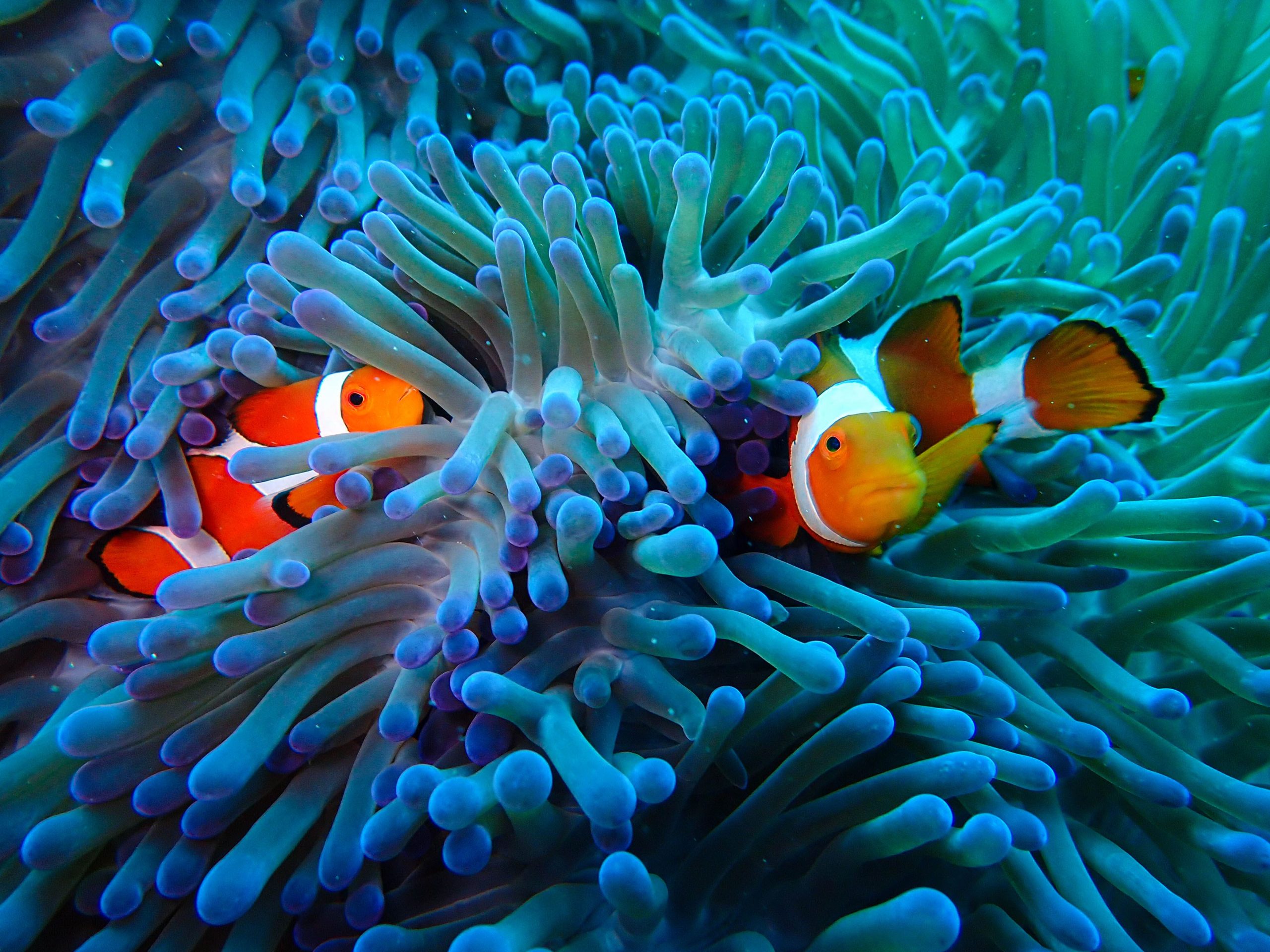
Clownfish are the obvious example. If you see a small orange, black or reddish fish repeatedly darting into the tentacles of an anemone, you have found one of the reef’s most familiar residents. The exact pattern may vary, but the relationship with the anemone is the giveaway.
Parrotfish are often heard before they are properly seen. Listen for the faint crunching sound as they graze algae from coral and rock with their beak-like teeth. Their colours can range from soft greens and blues to vivid pinks and yellows, but that strong, rounded beak and busy grazing habit are more dependable clues.
Damselfish often hold position over a small patch of coral, then dart out and back with surprising confidence. Many are tiny, but their territorial nature makes them easy to notice. Chromis, close relatives often seen in shimmering groups, are more likely to hover together above branching coral.
A fish resting on the seabed may be a goby, blenny or scorpionfish. This is where patience matters. Gobies are often small and alert, perched on sand or coral. Blennies have expressive faces and may tuck themselves into holes. Scorpionfish are masters of camouflage, blending into rock and coral with frilly outlines. Admire them from a respectful distance, as their spines may be venomous.
Use Colour and Markings With Care
Colour is what catches the eye, especially in clear tropical water, but it can mislead even experienced observers. Red and orange tones fade first with depth, while blues and greens travel further through the water. A fish photographed with a flash may look very different from the same fish seen at 15 metres.
Instead of relying on a single colour, look for a pattern. Is there a black spot near the tail? A stripe through the eye? A bright yellow back with a white belly? Are the fin edges coloured differently from the body? These details are more useful than remembering that a fish was simply “blue”.
Butterflyfish often have strong vertical bands, false eye spots near the tail, or a dark eye mask. These markings help confuse predators, and they make excellent identification clues for snorkellers. Moorish idols are particularly striking, with bold black, white and yellow bands and a long trailing dorsal fin. They are occasionally mistaken for bannerfish, which look similar but differ in body shape and fin detail.
For beginners, it is also worth accepting a broader identification. “A juvenile emperor angelfish” is a better observation than forcing a precise species name from a brief sighting. Juvenile fish can look dramatically different from adults, often wearing patterns that disappear as they grow.
Notice Where the Fish Lives
A reef is not one habitat. Coral gardens, sandy patches, sheltered lagoons, drop-offs and open blue water all attract different residents.
In shallow coral gardens, look for colourful damselfish, butterflyfish, wrasses and small groups of juvenile fish. Wrasses are especially varied, but many share an energetic, weaving swim and a long body that threads easily through coral. Some wrasses also form cleaning stations, where larger fish pause to have parasites removed by smaller cleaners.
Over sandy areas, keep your eyes low and move slowly. You may spot goatfish searching the seabed with their two chin barbels, or rays resting almost invisibly beneath a dusting of sand. Goatfish often change colour depending on activity and time of day, so their whisker-like barbels are the feature to watch.
At reef edges and deeper slopes, the scene often becomes more dramatic. Schools of snapper and fusilier may gather in the current, while larger groupers hold close to coral structures. Groupers are solid, heavy-bodied fish with large mouths and a measured way of moving. Their markings vary greatly, but their shape rarely does.
Learn a Few Reef Families First
Trying to identify every fish on your first day can take the pleasure out of being in the water. A more satisfying approach is to recognise families before species. Once you can confidently spot a parrotfish, surgeonfish or butterflyfish, the smaller differences become easier to notice.
Focus first on these familiar reef characters:
- Clownfish: Small, bold and closely associated with anemones.
- Parrotfish: Beak-like mouths, bright colours and coral-grazing behaviour.
- Butterflyfish: Thin, disc-shaped bodies with delicate mouths and eye-catching bands.
- Surgeonfish: Oval-bodied grazers, often with a sharp tail spine.
- Pufferfish: Rounded faces, large eyes and a gentle, unhurried swim.
- Lionfish: Striped bodies and extravagant venomous fin spines, usually hovering near shelter.
That last point is worth underlining: identification should never mean getting closer than is sensible. Do not touch coral, chase fish or put your hands near crevices for a better look. The reef is at its most extraordinary when it is allowed to behave naturally.
Make Identification Easier Before and After Your Swim
A simple preparation routine can make a surprising difference. Before entering the water, choose three fish families you would like to look for. This gives your swim a sense of purpose without turning it into a checklist. Afterward, note what you saw while the details are fresh: body shape, markings, depth, habitat, whether it was alone or schooling, and anything memorable about its behaviour.
If you take photographs, aim for a side-on image when conditions allow. A clear profile is far more useful for identification than a distant shot of a fish swimming away. Do not rely only on pictures, though. Your own observations of movement and habitat are often the clues a photograph cannot capture.
For divers, a calm buoyancy position is part of good fish spotting. Hovering quietly near the reef gives shy species time to emerge and prevents accidental contact with fragile coral. For snorkellers, floating still for a minute above a coral head can reveal far more than swimming continuously from one place to the next.
At The One Tenggol Island Resort, guided underwater experiences can also add valuable local insight. Dive professionals know where particular species are commonly seen and can help guests build confidence in reading reef life, whether it is a first snorkel or a certified dive.
Keep Curiosity Ahead of Certainty
Even expert marine naturalists occasionally pause over a fish identification. Reef fish change with age, sex, season and social status, and many species share similar colours. A careful “possibly” is more useful than a confident guess.
On your next swim, choose one fish that catches your attention and stay with it for a moment. Watch where it feeds, how it moves and who it shares the reef with. The name may come later, but the encounter will already have made the underwater wonderland feel more personal.