

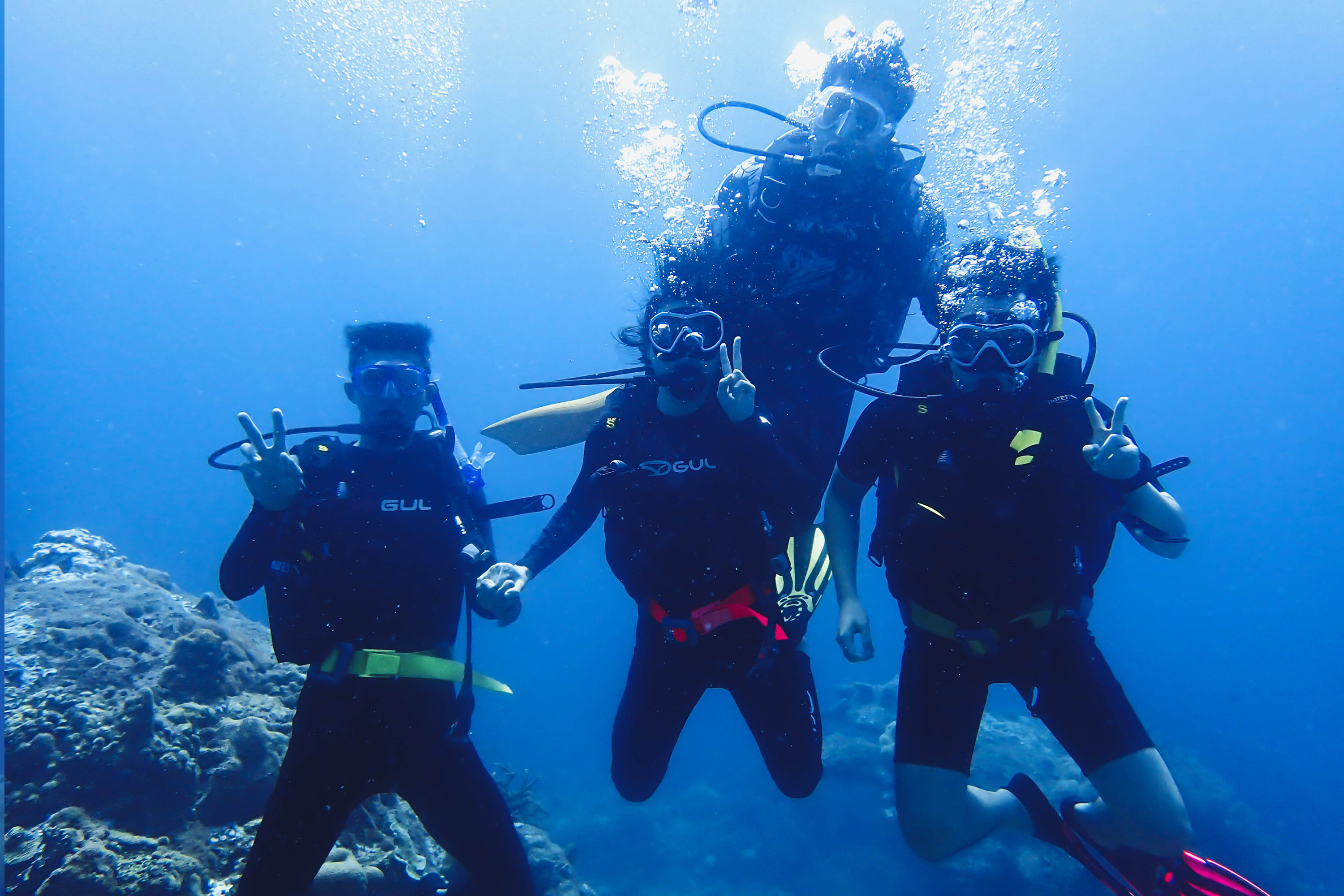
Your first giant stride into clear tropical water can change the shape of a holiday. This scuba certification levels guide helps you understand what each qualification actually allows you to do, so you can choose an experience that feels exciting, comfortable and right for your time on Pulau Tenggol.
For some guests, the goal is a memorable first encounter with reef fish above a sandy seabed. For others, it is the confidence to join certified dives and spend more time around dramatic coral walls, turtles and schooling fish. The route is not one-size-fits-all. Your swimming confidence, available holiday days and future diving plans all matter.
Scuba certification levels guide: where to begin
The most useful distinction is between trying scuba and becoming certified. A try-scuba session is designed as a supervised introduction. You learn a few essential skills, use professional equipment in shallow water and experience breathing underwater with a qualified instructor close by. It is ideal if you are curious but not ready to commit to a full course.
It does not, however, make you a certified diver. Think of it as a beautiful first chapter rather than a licence to dive independently with a buddy. It can be a wonderful addition to a resort stay, particularly for couples or families where one person wants to explore beneath the surface while others prefer snorkelling, the beach or an unhurried afternoon by the sea.
A full entry-level course is the next step. With SSI, this is generally the Open Water Diver certification. It combines knowledge development, confined-water skill sessions and open-water dives. By the end, you will have practised key safety skills, learnt how to manage buoyancy and understand how to plan straightforward recreational dives with a suitably qualified buddy.
The attraction of learning at an island destination is clear. Rather than fitting classes between ordinary routines, your days are shaped around the sea. You can wake to a beachfront view, focus on the course and still return to the comfort of a proper holiday setting when the equipment is rinsed and the day’s learning is complete.
Entry-level certification: Open Water Diver
Open Water Diver is the qualification most new divers are looking for. It opens the door to recreational diving around the world, usually within the training agency’s stated depth limit for entry-level divers. It also gives you the skills and judgement to continue gaining experience after the course, rather than relying on an instructor for every underwater excursion.
Expect the course to require concentration. There is theory to absorb, skills to repeat and a little patience while you become familiar with breathing from a regulator, clearing a mask and controlling your position in the water. The reward is substantial: calm buoyancy and a composed response to small challenges turn the reef from something you look at into a place you can genuinely explore.
You do not need to be an elite swimmer, but you must be comfortable in water and meet the course’s fitness and swimming requirements. A medical questionnaire is also part of responsible dive training. If you have a relevant medical condition, you may need approval from a doctor before taking part. It is best to address this well before travelling, rather than leaving it to the day you arrive.
Some people have limited time and choose an intermediate entry route, often called Scuba Diver. This can provide a more restricted certification and may count towards completing Open Water Diver later. It is useful in specific circumstances, but if your holiday schedule permits, the full Open Water qualification offers more freedom and better value for long-term divers.
Why skill matters more than speed
A certificate is not a finish line. Two divers may hold the same entry-level card but have very different comfort levels underwater. One may have completed a course yesterday; another may have logged dozens of relaxed reef dives. That is why a thoughtful dive centre will consider your recent experience, conditions and confidence when recommending a site.
Take the time to become genuinely comfortable with buoyancy. It protects fragile coral, improves air use and makes every encounter more enjoyable. A turtle passing over a reef should feel like a quiet privilege, not a moment spent fighting to stay at the right depth.
Your next stage: advanced training and specialties
After Open Water, many divers look towards advanced training. This phrase can mean different things, so it is worth checking the exact course name rather than choosing based on the word “advanced” alone.
SSI’s Advanced Adventurer programme lets divers sample several speciality areas through training dives. It is a practical choice for someone who wants broader exposure to experiences such as deeper diving, navigation, night and limited-visibility diving, or buoyancy-focused development. You do not necessarily need to complete whole speciality courses first, making it a compelling option for a holiday diver who wants variety.
SSI also offers the Advanced Open Water Diver recognition, which is earned through a combination of speciality certifications and logged dives. This is not simply a weekend course with a familiar name. It reflects wider training and experience, so it may suit divers building a considered pathway over several trips.
Specialities are where diving becomes more personal. Perfect Buoyancy can transform your ease in the water. Enriched Air Nitrox may appeal to frequent divers who want to extend no-decompression time within appropriate limits. Deep Diving builds the skills and awareness needed for greater depths, while Marine Ecology adds richer context to every reef encounter.
Choose based on the diving you want to do, not on collecting cards. A photographer may benefit most from buoyancy and equipment-focused practice. A traveller who dreams of dramatic walls may prioritise deeper-diving knowledge. Someone returning to diving after a long break may be better served by a refresher before pursuing a new certification.
Rescue training: the level that changes perspective
Rescue Diver training is often described as the point where a diver begins looking beyond their own equipment, air and comfort. The course develops prevention, awareness and response skills. You learn to recognise stress in other divers, manage common problems and assist in emergency scenarios.
It is demanding, active and deeply worthwhile. It is also not usually the first choice for a short, first-time island holiday. Most divers reach this stage after building solid experience and completing the required first-aid and emergency-care elements. If you are already an experienced recreational diver, though, rescue training can be one of the most rewarding ways to grow your confidence and become a stronger buddy.
Beyond that are professional and technical pathways. Divemaster training is for divers who wish to lead, supervise and work within the dive industry. Instructor training moves into teaching and certification. Technical courses, meanwhile, involve more complex planning, equipment and environments. These are purposeful commitments, not simply higher rungs for a casual holidaymaker, and there is no need to rush towards them.
Choosing the right level for your Tenggol holiday
Start with an honest question: what would make this trip feel complete? If you want one extraordinary underwater memory, try scuba may be enough. If you hope to continue diving in the Maldives, Mediterranean or closer to home, Open Water Diver is the sensible foundation. If you are already certified but feel rusty, a refresher is often the best first session before joining fun dives.
Time matters too. Training should not be squeezed so tightly that it feels like a race. Allow space for rest, hydration and enjoying the island itself. Conditions can change, and a premium diving holiday should still leave room for sunset views, excellent meals and the simple pleasure of doing very little between adventures.
At The One Tenggol Island Resort, formal SSI training can sit naturally alongside a secluded beachfront escape. That combination is particularly valuable when travellers have different plans: one guest can take a course while another snorkels, relaxes or joins a later boat excursion.
Bring a sense of adventure, but bring patience as well. The sea rewards divers who learn carefully, respect its limits and take time to notice what is already there. Your best certification level is the one that lets you meet Pulau Tenggol’s underwater wonderland with confidence, curiosity and genuine enjoyment.