

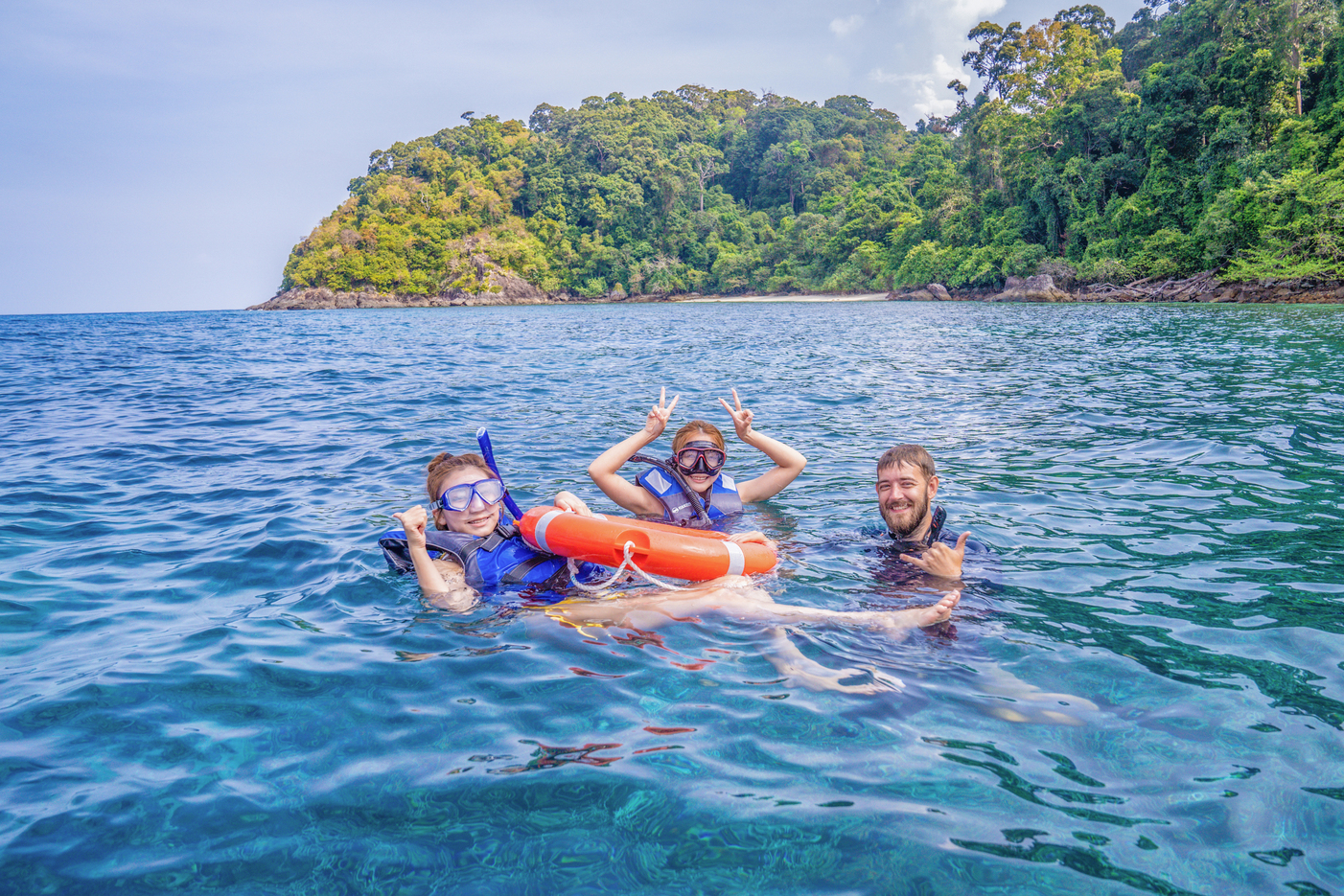
A mask slips beneath the surface, the sound of the shore fades, and suddenly a whole reef appears below you. For first-time snorkellers, that quiet first glimpse can be the highlight of an island holiday. But is snorkelling safe for beginners? Yes, when the setting, equipment and supervision are right. It is not about being fearless or an expert swimmer. It is about starting in calm water, moving at your own pace, and treating the sea with the respect it deserves.
At a well-managed island resort, snorkelling should feel like an invitation to discover an underwater wonderland, not a test of confidence. The safest first session is usually relaxed, guided and close to shore, with time to become comfortable before you head towards deeper water.
Is snorkelling safe for beginners in Malaysia?
For many beginners, Malaysia’s clear tropical waters and colourful shallow reefs create an excellent introduction to snorkelling. Around islands such as Pulau Tenggol, marine life can be remarkably close to the surface: schools of bright fish, coral gardens and the occasional turtle may be visible without the need to swim far.
That said, beautiful water is not automatically safe water. Conditions change with weather, tides, currents, boat activity and visibility. A sheltered bay on a calm morning may be ideal for a newcomer, while an exposed site later in the day may suit only more confident swimmers. The answer to whether snorkelling is safe for beginners therefore depends less on your experience level and more on choosing a responsible operator, a suitable site and the right moment to go.
A professional briefing makes a genuine difference. Your guide should explain where to enter and leave the water, how far to swim, what the conditions are like that day, and how to signal if you need help. Never feel pressured to continue if the water feels choppier than expected or you simply do not feel settled. The reef will still be there tomorrow.
Begin with comfort, not distance
The most common beginner mistake is trying to swim too far too soon. Snorkelling is most enjoyable when you float slowly, look down and let the reef come to you. You do not need to race across a bay to see something extraordinary.
Before leaving the shallows, take a few minutes to practise. Stand where you can comfortably touch the seabed if appropriate, put your face in the water, and breathe slowly through the snorkel. Some people need a moment to adjust to breathing through their mouth. That is completely normal. Lift your head whenever you wish, clear your mask if it fogs, and begin again without rushing.
Fins help you move efficiently, but they can feel unfamiliar at first. Use small, gentle kicks from the hips rather than cycling your knees. Wide, forceful kicking wastes energy and can make you feel breathless. A snorkelling vest or buoyancy aid is a wise choice for beginners, including capable swimmers. It keeps you comfortably afloat, reduces fatigue and gives you more attention to give the extraordinary view below.
If you are nervous in open water, tell the guide at the beginning. A good team will not see this as an inconvenience. They can suggest a shallower route, keep you close to the group or arrange a gentler introduction. At The One Tenggol Island Resort, the value of a resort-and-dive-centre setting is that underwater experiences can be approached with experienced local guidance, while the rest of the day still belongs to barefoot comfort on the beach.
Know the conditions that change the plan
Snorkelling safety is largely about good decisions made before you enter the water. Check the sea state rather than judging only by the sunshine. Wind can create surface chop, recent rain can reduce visibility, and currents may be stronger around headlands or channels than they appear from the beach.
Listen carefully if a guide changes the snorkelling location or postpones a trip. This is not lost adventure. It is sound judgement. The best operators select sites for the day’s actual conditions, not the itinerary printed yesterday.
Beginners should also avoid snorkelling alone. A buddy gives you someone to share the excitement with, but more importantly, someone who can notice if you are tired, uncomfortable or drifting away from the agreed area. Stay within sight of your guide or companion, and agree on a simple hand signal before you start. Pointing towards shore, raising a hand, or giving a clear thumbs-up can communicate plenty on the surface.
Be particularly cautious around boat routes. Do not assume a boat captain can see a snorkeller’s head above the water. Use designated snorkelling areas, follow your guide’s route and, where appropriate, use a surface marker float. If you need to cross a channel or move into deeper water, wait for clear instruction.
Choose equipment that lets you relax
Expensive equipment is not essential. Equipment that fits properly is. A leaking mask can turn an otherwise magical session into a frustrating one, while a snorkel that feels awkward may cause unnecessary anxiety.
Your mask should seal gently against your face without painful pressure. Test it before entering the sea: hold it against your face and breathe in lightly through your nose. If it stays in place for a moment without the strap, the fit is promising. Keep hair away from the seal, as even a small strand can allow water in.
A snorkel should sit comfortably in your mouth, with the mouthpiece neither stretched nor loose. Fins should be snug but not tight enough to rub. If you are hiring equipment, ask for an adjustment rather than accepting discomfort. Premium holiday experiences are built on small details, and a correct fit is one of the most valuable.
Sun protection matters too. The sun is stronger on the water because it reflects from the surface, and snorkellers may not notice how long they have been exposed. A rash vest offers welcome coverage and warmth, while a reef-conscious sunscreen applied well before entering the sea can help protect exposed skin. Drink water before and after your session, especially after a warm boat journey or a long time in the sun.
The reef is not a handrail
Coral can look solid from above, but it is a living animal habitat and often more fragile than it appears. Keep a comfortable distance, float rather than stand, and never hold coral to steady yourself. Besides damaging the reef, contact can lead to cuts, stings or an unpleasant encounter with a well-camouflaged resident.
The same respectful distance applies to marine life. Turtles, rays and reef fish are far more memorable when they behave naturally. Do not chase, touch or feed them, and avoid blocking their path. Move slowly, keep your hands close to your body and allow animals the space to choose whether to remain nearby.
This approach also improves safety. Calm movements conserve energy, reduce the chance of accidental contact and make it easier to notice your surroundings. Underwater discovery is at its best when it feels unhurried.
When should a beginner sit out?
There is no prize for pushing through discomfort. Skip a session, or return to shore early, if you feel unwell, unusually tired, panicky, cold, dizzy or short of breath. Do the same if you have had alcohol, are badly sunburnt, or are managing a medical condition that could affect you in the water.
People with asthma, heart conditions, ear problems, recent illness or pregnancy-related concerns should seek personal medical advice before participating. Snorkelling can be gentle, but it still asks your body to cope with heat, swimming and an unfamiliar environment. Be honest with the activity team about your comfort and health. It allows them to support you properly.
For families, children should be closely supervised at all times, even if they are confident swimmers. A well-fitted flotation aid, a calm shallow area and a patient adult nearby can transform a first experience from overwhelming to unforgettable.
Let your first snorkel be wonderfully simple
The safest beginner snorkel is rarely the longest or the most ambitious. It may be twenty quiet minutes above a sheltered reef, learning to breathe steadily while flashes of blue and yellow pass beneath you. That is enough to understand why people return to the water again and again.
Give yourself permission to go slowly, ask questions and turn back whenever you choose. With calm conditions, suitable equipment and attentive guidance, snorkelling can be one of the most accessible ways to experience paradise beneath the surface – and your first glimpse of the reef may be only the beginning.