

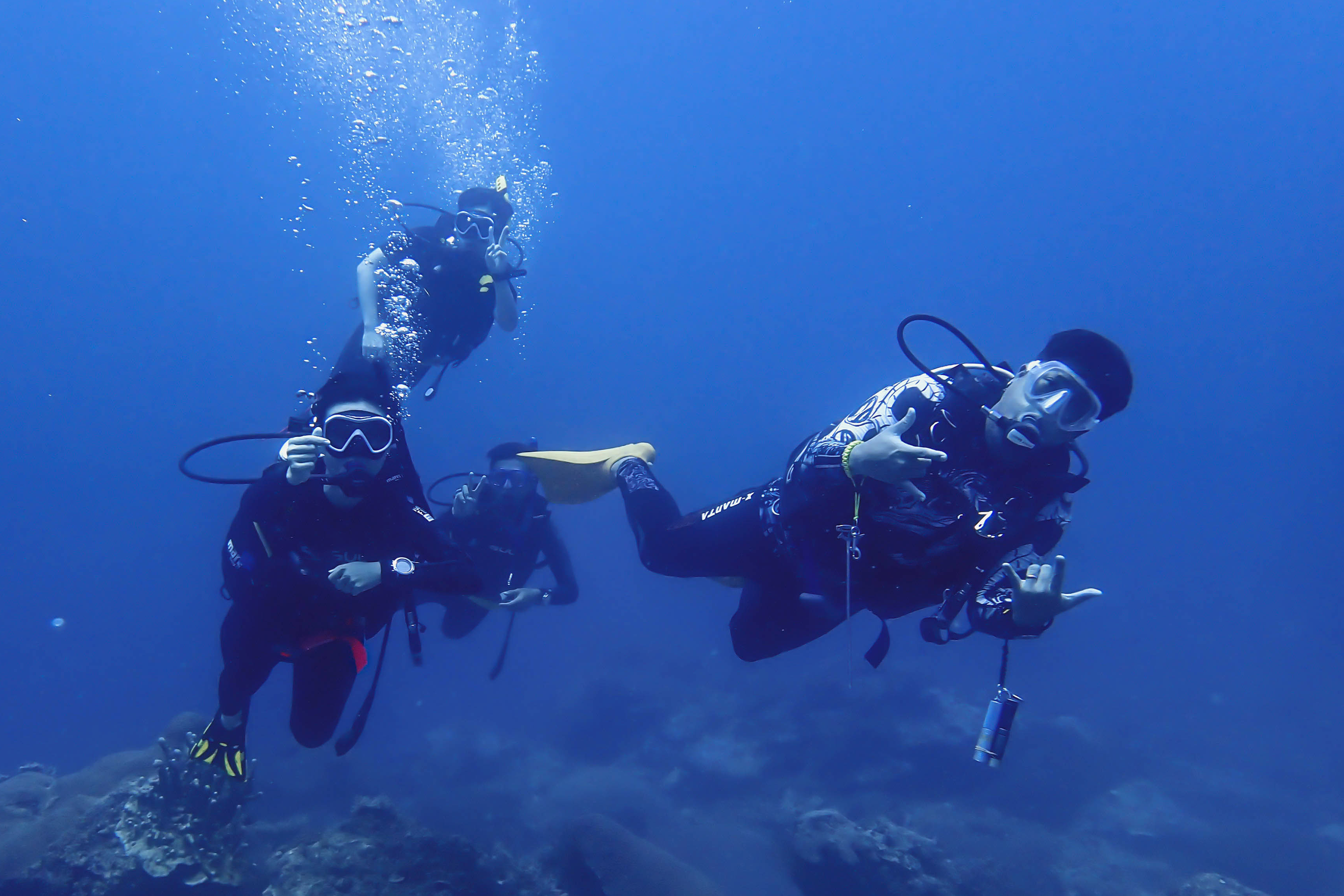
The first time you breathe underwater, the world does not become silent. You hear your own steady bubbles, notice sunlight moving across the reef and realise that the colourful life below the surface is no longer something you only see from a boat. This SSI beginner course review is for holidaymakers who want that moment to feel exciting, well supported and genuinely memorable – not rushed or intimidating.
For many guests, learning to scuba dive is the highlight of a Tenggol escape. It turns a beach holiday into an invitation to explore an underwater wonderland, from reef fish moving through coral gardens to the possibility of seeing larger marine visitors in the blue. The right course is not simply about earning a certification. It is about building calm, capable habits that let you enjoy the experience.
What an SSI beginner course is designed to do
For most first-time divers, the starting point is the SSI Open Water Diver course. It is designed to take you from no diving experience, or very little experience, to the foundation skills needed to dive with a buddy within the limits of your certification. On successful completion, this qualification is recognised internationally and permits recreational diving to a maximum depth of 18 metres.
The course combines independent learning, instructor-led knowledge development, practice in sheltered water and supervised open-water dives. The exact schedule depends on your chosen package, the weather and how comfortably you progress. That flexibility matters. Learning to clear a mask or manage buoyancy is easier when you have time to repeat a skill, ask a question and let confidence catch up with curiosity.
SSI’s digital learning format is particularly useful for travellers. You can complete much of the theory before your island stay, leaving more of your precious holiday time for the sea. It does, however, require some self-discipline. Reading the materials properly and completing the knowledge checks before arrival makes the practical sessions more relaxed and rewarding.
SSI beginner course review: what the experience feels like
A good beginner course should feel structured, never clinical. You will start with the essentials: how your equipment works, how to communicate underwater, how to equalise your ears and what to do if something does not feel right. These are not dramatic obstacles. They are sensible routines, taught step by step until they become familiar.
The earliest underwater sessions can bring a mix of wonder and mild nerves. Breathing from a regulator feels different from snorkelling, and a mask filling with water can seem daunting until you practise clearing it in a controlled setting. A patient instructor makes a significant difference here. Rather than measuring progress against another guest, focus on being comfortable with each skill before moving on.
Buoyancy is often the point where everything begins to click. At first, staying level in the water can take concentration. With guided practice, you learn to breathe slowly, adjust your position gently and avoid touching the reef. That control makes diving more peaceful and helps protect the marine environment you have come to see.
Open-water dives are where the training becomes an adventure. Skills are still part of the plan, but they take place against a living backdrop of corals and tropical fish. Conditions will shape the choice of site, so there is no promise of a particular animal or a perfectly glassy sea on every dive. That is part of authentic island diving. A professional dive team chooses locations that suit both safety and your stage of learning.
Why a resort-based course can be a better holiday choice
Learning to dive does not have to mean staying in a basic training camp. At The One Tenggol Island Resort, the pleasure of the course is complemented by a premium island setting: time on the beach between sessions, comfortable accommodation and the anticipation of returning to clear water rather than a crowded city pool.
That balance can be especially valuable for couples, families and groups where not everyone wants to train. One person can work towards a qualification while others snorkel, relax by the shore or join the island experience in their own way. At the end of the day, everyone comes back together with stories worth sharing.
There is a practical benefit too. When accommodation, boat access and a dedicated dive centre are part of the same destination, the day feels less fragmented. You are not organising transport across an unfamiliar area before an early briefing. Instead, the rhythm is simple: learn, rest, eat well and return to the water ready for more.
Luxury should not be confused with lowering the standards of training. The best version of this experience pairs attentive hospitality with clear safety briefings, well-maintained equipment and instructors who know when to encourage a student and when to slow things down.
What to look for before you book
The value of an SSI beginner course depends less on a glossy promise and more on the quality of attention you receive. Ask how many days the course is expected to take, whether online learning should be completed in advance and what is included in the price. It is also sensible to confirm whether equipment hire, certification fees, marine park charges and accommodation form part of your selected package.
Consider the instructor-to-student ratio. Smaller groups can mean more individual coaching, particularly for guests who are nervous in the water or need additional practice with equalising. If you are travelling with a friend, remember that you may not progress at exactly the same pace. A good team will keep the experience enjoyable without treating the course like a race.
Your health and comfort deserve an honest conversation before arrival. Guests with certain medical conditions may need a doctor’s approval to dive, while a recent cold can make equalising difficult. You should also be able to swim and be comfortable in water, although you do not need to arrive as an expert swimmer. Tell the dive team about any concerns early. It is far easier to plan the right support than to push through anxiety on the day.
Finally, think about your onward travel. Diving and flying do not mix immediately, because your body needs time to release absorbed nitrogen after diving. Your dive centre can advise on the appropriate no-fly interval for your itinerary, so leave enough space before your flight home.
Is the SSI course right for every beginner?
It is an excellent fit for travellers who want a recognised qualification rather than a single introductory splash. You will invest more time and attention than you would on a try-scuba session, but gain skills you can use on future holidays around the world. For someone who has always watched divers from the boat and wondered what lies beyond the surface, that is a meaningful return.
It may not be the best choice if you only have a very short stay, dislike structured learning or are unsure whether breathing underwater appeals to you at all. In that case, a supervised try-scuba experience can be the gentler first step. It lets you experience the sensation of scuba in a closely controlled environment before committing to a full course.
For confident snorkellers who are ready for more, the course offers a natural progression. Snorkelling reveals the brightness of the shallows; scuba gives you time to hover beside a reef, notice the smaller creatures and feel part of the sea rather than simply passing over it.
Arrive ready to enjoy the water
Bring swimwear, reef-friendly sun protection, a sense of patience and an open mind. Avoid heavy drinking the night before training, stay hydrated in the tropical heat and rest properly between dives. If you use prescription lenses, mention this before your course, as a suitable mask may be available.
Most of all, give yourself permission to learn slowly. The divers who look most effortless underwater are not the ones who hurried through the first day. They are the ones who listened carefully, practised the basics and discovered that calm breathing is the beginning of every extraordinary underwater encounter.
A beginner certification can become the most lasting souvenir of an island holiday: not something packed away after the journey, but a new way to experience the sea wherever you travel next.