

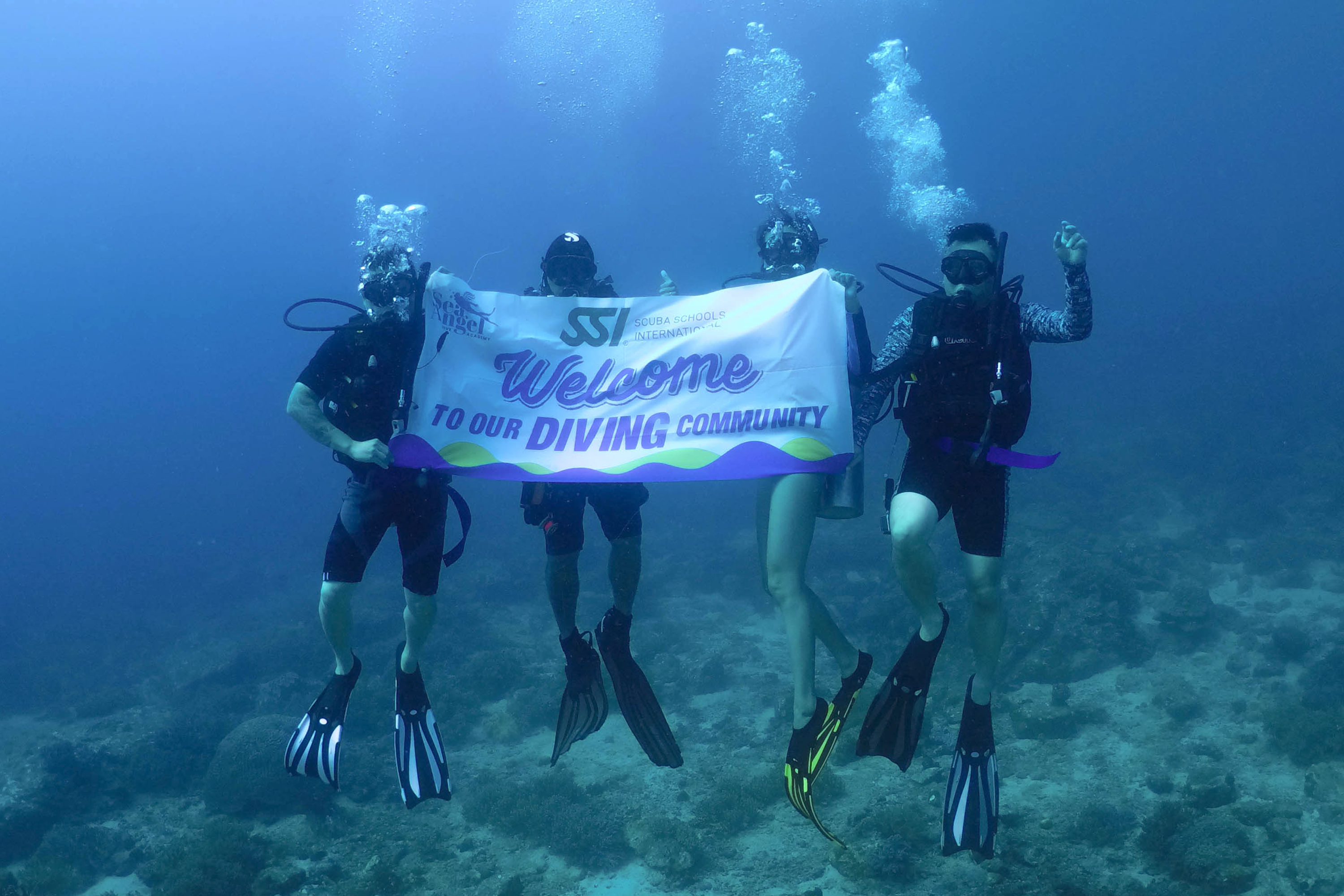
A beach holiday changes character the moment you descend beneath the surface. Instead of admiring clear water from the shore, you can hover above coral gardens, watch a turtle glide past, and see the reef’s smaller dramas unfold at your own pace. That is one of the top reasons to learn scuba: it turns a beautiful island escape into an experience with an entirely new dimension.
For many guests, learning to scuba dive is less intimidating than expected. With calm guidance, properly fitted equipment and the right setting, beginners can build confidence step by step. On an island such as Pulau Tenggol, that learning experience comes with the rare pleasure of returning afterwards to a comfortable room, a beachfront view and an unhurried evening by the sea.
The top reasons to learn scuba go far beyond the view
1. You get to experience the reef, not just look at it
Snorkelling offers a wonderful glimpse of marine life, particularly in bright, shallow water. Scuba allows you to stay below longer, move with greater ease and visit areas beyond the surface. A reef becomes more detailed when you can pause beside it: the movement of anemones, the camouflage of a scorpionfish, a school of fish shifting direction as one.
This is not about rushing from sighting to sighting. The best dives have a sense of quiet. You breathe slowly, settle into the water and notice what is happening around you. For travellers who value nature as much as luxury, it is a more immersive way to experience paradise.
2. It gives your holiday a genuine sense of achievement
Some holidays are designed purely for switching off, and there is plenty to be said for that. Yet learning a new skill can make time away feel especially rewarding. Completing your first confined-water skills, managing your buoyancy or calmly clearing a mask are small moments that add up to real confidence.
A recognised SSI course provides structure without taking away the enjoyment of an island stay. You learn the safety principles, practise essential skills and apply them in open water under professional supervision. At the end, you have more than photographs and a tan: you have an ability that can shape future journeys too.
3. Scuba creates a different kind of calm
The sea is lively, but a well-managed dive can feel remarkably peaceful. There are no notifications, no traffic and no pressure to fill every minute. Your attention narrows to breathing, trim, the rhythm of your fins and the blue water ahead.
That calm does require respect. You must listen to your instructor, check your equipment and follow the plan. For many first-time divers, however, those simple routines become part of the appeal. They create a welcome sense of focus that is hard to find in everyday life.
4. You can share an adventure without needing the same experience level
Scuba is often seen as an activity only for serious divers. In reality, it can suit couples, friends and families with varied confidence levels. One person may take a Try Scuba experience, another may complete a refresher, while a certified diver joins a guided boat dive. Everyone still has a shared story to tell over dinner.
There are sensible limits. Younger participants need to meet course age requirements, and anyone with a medical condition should seek suitable advice before booking. Sea conditions and individual comfort also matter. A good dive centre will never treat everyone as though they have identical needs.
At The One Tenggol Island Resort, this balance is part of the appeal: guests can pair organised underwater experiences with the comfort and privacy of a premium island retreat. Non-divers are not left on the sidelines, either. Beach time, snorkelling and the simple pleasure of the coastline make room for everyone.
5. It changes how you travel
Once you are certified, coastlines begin to look different. You may start choosing destinations for their reefs, marine seasons and underwater landscapes as well as their restaurants or beaches. A tropical island becomes more than a scenic backdrop. It becomes an entry point to a world most visitors never properly see.
That does not mean every future holiday must revolve around diving. Some travellers prefer one or two relaxed dives between spa time, meals and long afternoons on the sand. Others plan their entire itinerary around the next underwater encounter. Scuba is flexible enough to suit both approaches.
6. You learn to appreciate marine life more closely
Seeing a reef at eye level often builds a stronger connection to the sea. You begin to understand why careful finning matters near coral, why touching wildlife is never acceptable and why patient observation is more rewarding than chasing a perfect photograph.
This perspective is particularly valuable in vibrant marine environments, where every responsible choice helps protect the experience for the next group of visitors. Divers are taught to maintain good buoyancy and awareness not simply because it improves technique, but because reefs are living ecosystems. The privilege of entering that space comes with a duty to leave it undisturbed.
7. It is a sociable activity that still feels personal
A dive boat brings together people who may have arrived from completely different places but share the same anticipation. Conversations often begin with the day’s conditions or a creature somebody hopes to spot, then continue long after towels have dried.
At the same time, each dive is deeply individual. Your first glimpse of a turtle, the moment you realise you are neutrally buoyant, or the surprise of finding colour in a shaded reef can feel entirely your own. Few holiday activities combine community and personal discovery so naturally.
8. Beginner training is designed to be progressive
The idea of breathing underwater can sound extraordinary, so it is reasonable to feel nervous. Quality training does not ask you to ignore that feeling. It introduces skills in manageable stages, beginning where you can stand or where conditions are tightly controlled, before moving into open water when you are ready.
You will learn practical habits such as equalising your ears, communicating with hand signals and responding to minor issues without panic. There is theory involved, and certification asks for attention and effort. But it is not an endurance test. The goal is to create capable, relaxed divers who understand their boundaries.
How to decide whether this is the right holiday to start
If you are curious but uncertain, consider what you want from the experience. A Try Scuba session can be ideal for travellers who want an expertly guided first taste without committing immediately to a full certification course. It offers a chance to breathe underwater, become familiar with the equipment and decide whether you would like to go further.
If you already know the ocean is calling, allocating time for a complete entry-level course can be a superb choice. Avoid squeezing training between a late arrival and a busy departure. Give yourself enough time to learn without pressure, rest well and enjoy the island around your sessions.
Be honest about comfort in the water, too. You do not need to be an elite swimmer, but you should be prepared to meet the course requirements and to communicate openly with your instructor. Bring a sense of curiosity rather than a need to prove anything. The most enjoyable first dives are usually the ones taken slowly.
For certified divers returning after a long break, a refresher can make far more sense than pushing straight into a demanding dive. Skills return quickly with professional support, and a calmer start allows you to focus on what brought you there in the first place: the colour, movement and quiet wonder beneath the waves.
The sea will still be waiting after your first breath underwater. Give yourself permission to take that breath slowly, trust the process and let an island holiday become the beginning of a lifelong connection with the ocean.